Lessons Reviews Biography Prices Contact Free Sheet Music
DA EN فارسی
Book trial lesson — 350 DKK

Private piano school · Brofogedvej 10, Copenhagen NV

Classical piano
lessons for children
and adults

Learn piano with a dedicated and experienced pianist in the heart of Copenhagen NV. Individual 1:1 tuition in classical piano, sight-reading and music theory — tailored to your level, your pace and your goals.

🎼 Repertoire from Baroque to Late Romantic — Bach, Mozart, Haydn, Schubert, Chopin, Debussy, Ravel and Rachmaninov.

★★★★★ 4.7 · 23 Google reviews
✓ Children from age 7 & all adult levels
✓ EPTA Denmark member

★ EPTA Denmark Member

European Piano Teachers Association — certified classical piano teacher.

Opening hours

Mon – Fri: 10:00 – 19:00

Sunday: 08:30 – 16:00

Address

Brofogedvej 10
2400 Copenhagen NV

"Discipline and continuity are the keys to success."

— Aria Farjadi

15+Years experience
200+Students taught
EPTACertified teacher
AllLevels welcome
What we offer

Lessons for
every level

From the very first note to MGK preparation and advanced repertoire — we meet you exactly where you are.

01 Children &
Beginners
Structured and engaging lessons from age 5. We build a solid foundation with technique, sight-reading and musical understanding — at the child's pace.
02 Adult
Piano
It is never too late. Personal tuition tailored to your goals and musical taste — from Bach and Chopin to pop and film music.
03 MGK &
Advanced
Preparation for music high school and higher education. Advanced repertoire, technique and audition training with experienced guidance.
04 Masterclass &
Grade Exams
Intensive workshops and EPTA-certified grade exams (ABRSM / Trinity) for students who want to formally document and advance their level.
Sight-reading Music Theory Ear Training Performance Prima Vista Student Concert Rent a Piano Video Tips
01 — Musicianship

Sight-reading

Sight-reading is the ability to play a piece of music from notation at first glance — without prior preparation. It is one of the most valued skills in classical training and a mandatory component of ABRSM and Trinity grade exams at every level.

At Farjadi Piano School, sight-reading is not treated as an afterthought. We build it systematically from the first lesson: training the eye to read ahead, the hands to respond independently, and the mind to stay calm under uncertainty. Students learn to assess a piece quickly — its key, time signature, general shape — before placing their hands on the keys.

We use dedicated sight-reading material alongside your regular repertoire. Progress is gradual and measurable. Students who practise sight-reading consistently gain confidence that extends well beyond exams — they become musicians who can sit down at an instrument and explore new music freely.

What we work on

  • Reading rhythm and pitch simultaneously without stopping
  • Eye–hand coordination and looking ahead in the score
  • Identifying key signatures, time signatures and patterns instantly
  • Keeping a steady pulse even through mistakes
  • Exam-style preparation for ABRSM and Trinity sight-reading tests
  • Stylistic awareness — reading dynamics, articulation and phrasing from notation

Sight-reading is included as a natural part of all lesson types and receives focused attention in grade exam preparation.

Suitable for

All levels from Grade 1 upwards. Especially important for students preparing for ABRSM / Trinity exams, MGK auditions or music school entrance.

Typical outcome

After 3–6 months of consistent practice, most students report significantly greater confidence when encountering unfamiliar music — and measurably better exam results in the sight-reading component.

Materials used

ABRSM Sight-reading series, Paul Harris Improve your Sight-reading, teacher-selected pieces at the appropriate grade level.

02 — Foundation

Music Theory

Music theory is the language that explains what you hear and what you play. Understanding it transforms you from someone who follows instructions into someone who truly understands music — and can make independent, informed artistic decisions.

At Farjadi Piano School, theory is never taught as an isolated academic exercise. Every concept is connected directly to the music you are studying. When we discuss a dominant seventh chord, you hear it in Beethoven. When we analyse a modulation, you feel it in Chopin. Theory becomes a tool for deeper understanding, not a test to pass.

For students preparing for ABRSM or Trinity grade exams, theory is a graded requirement from Grade 5 onwards. We prepare students for written theory exams as well as the aural and viva sections. For younger students and beginners, we introduce theory concepts playfully — through games, patterns and improvisation.

Topics covered

  • Notes, rhythm, time signatures and the basics of notation
  • Scales — major, minor, pentatonic, modal
  • Intervals, triads and seventh chords
  • Keys, key signatures and the circle of fifths
  • Harmonic functions: tonic, dominant, subdominant and voice leading
  • Musical form: binary, ternary, rondo, sonata form
  • Style periods: Baroque, Classical, Romantic, 20th century
  • Preparation for ABRSM / Trinity written theory exams (Grades 1–8)

Theory can be taught as part of regular piano lessons or as a dedicated separate subject — particularly useful for students preparing for Grade 5 Theory (required before ABRSM practical Grades 6–8).

Suitable for

All students. Beginners receive theory as an integrated part of their lessons. Advanced students may benefit from dedicated theory sessions, particularly before Grade 5 Theory exam.

Exam requirement

ABRSM requires passing Grade 5 Theory (or an equivalent) before candidates may enter Grades 6, 7 or 8 practical exams. We prepare students thoroughly for this.

Materials used

ABRSM Music Theory in Practice series, Trinity Theory workbooks, teacher-created worksheets and in-lesson analytical work.

03 — Musicianship

Ear Training

A trained musical ear is what separates a musician who plays notes from one who plays music. Ear training develops the ability to hear, identify and reproduce musical elements — intervals, chords, rhythms and melodies — by listening alone.

At Farjadi Piano School, ear training is woven into every lesson. Before correcting a student at the piano, we ask: can you hear that something is wrong? What is it? This builds self-correction — one of the most powerful skills a musician can have. Students who train their ears progress faster, practise more efficiently and perform with far greater musical intention.

We work on aural skills in a structured way, building from the simplest intervals (perfect fifth, octave) to complex chord progressions and modal melodies. Students preparing for ABRSM or Trinity exams receive focused preparation for the aural tests, which are tested at every grade level from 1 to 8.

What we develop

  • Interval recognition — hearing and naming intervals by ear
  • Chord quality identification — major, minor, diminished, augmented, dominant 7th
  • Melodic dictation — writing down a melody after hearing it played
  • Rhythmic dictation and clapping back rhythmic patterns
  • Identifying tonality (major/minor) and cadences
  • Singing back short phrases (singing from the inner ear)
  • Relative pitch and absolute pitch development exercises
  • Aural test preparation for ABRSM and Trinity exams

Ear training is included in all lesson types. Students preparing for conservatory or MGK auditions receive intensive aural work as part of their audition preparation.

Suitable for

All levels. Ear training starts from the very first lesson — even young children learn to recognise high and low, fast and slow, happy and sad. It grows in complexity with the student.

Typical outcome

Students who work consistently on ear training report being able to play melodies by ear, identify wrong notes in their own playing, and experience a much deeper connection to the music they perform.

Tools used

ABRSM Aural Training in Practice, Musictheory.net exercises, piano-based interval drills and teacher-designed melodic dictation exercises.

04 — Stage skills

Performance

Performance is a discipline in its own right. Playing alone in a practice room and playing in front of an audience are two entirely different experiences — and both must be trained. At Farjadi Piano School, we prepare students not just to play well, but to perform well.

Performance anxiety is normal and manageable. We work on the psychology of performing: how to control nerves before going on stage, how to recover from mistakes without losing the musical thread, and how to communicate with an audience through gesture, presence and intention. Students who perform regularly gain a confidence that carries over into every other aspect of their musical development.

Throughout the year, students have multiple performance opportunities — from informal in-lesson performances to the annual student concert. For advanced students, we simulate exam conditions and audition scenarios as part of structured preparation.

What we work on

  • Stage presence — posture, walking on, bowing, preparation at the keyboard
  • Managing performance nerves with breathing and focus techniques
  • Memorisation strategies: harmonic, structural, kinaesthetic and aural memory
  • Performing from memory versus performing with score
  • Consistency under pressure — making every run-through count
  • Communicating dynamics, character and phrasing to an audience
  • Preparation for grade exams, auditions and recitals
  • Video recording of performances for self-evaluation

All students are encouraged to participate in the annual student concert. Advanced students preparing for MGK, conservatory or grade exams receive dedicated performance coaching.

Suitable for

All levels. Children benefit greatly from early performance experience. Adults who feel nervous about performing find that a structured, supportive approach transforms their relationship with the stage.

Annual student concert

Held once a year in an intimate venue in Copenhagen. Students of all ages and levels perform for family, friends and fellow students in a warm, encouraging atmosphere.

Exam preparation

Grade exam performance components (ABRSM / Trinity) are rehearsed under simulated exam conditions so students arrive feeling calm, prepared and confident.

05 — Advanced reading

Prima Vista

Prima vista — Italian for "at first sight" — is the art of performing music you have never seen before, with full musical expression, immediately. It goes beyond technical sight-reading: the player must make real-time artistic decisions about phrasing, dynamics, character and style while simultaneously decoding the notation.

Prima vista is a core skill for professional musicians — chamber musicians, accompanists, répétiteurs and orchestral players must sight-read at a high level every day. It is also highly valued in music school and conservatory auditions, where candidates are often asked to read an unfamiliar piece at the piano.

At Farjadi Piano School, prima vista training is introduced once students have a solid technical foundation (approximately Grade 4–5 level). We work with a wide range of styles and periods, training students to quickly assess the character of a piece and project that character even on a first reading. The goal is not perfection — it is musical communication from the very first note.

What we develop

  • Reading ahead — keeping the eye well ahead of the hands at all times
  • Instant stylistic recognition — Baroque ornamentation, Classical phrasing, Romantic pedalling
  • Making quick decisions about tempo, character and dynamics before playing
  • Sustaining musical flow through difficult passages rather than stopping
  • Accompanying skills — reading a vocal or instrumental line at sight
  • Score reduction — playing orchestral or choral scores at the piano
  • Prima vista as preparation for MGK and conservatory auditions

Prima vista is introduced from approximately Grade 4 level and becomes a focus area for students preparing for advanced examinations and auditions.

Suitable for

Intermediate to advanced students (approximately Grade 4 and above). Particularly important for students aiming for MGK, conservatory or professional music studies.

Difference from sight-reading

Sight-reading focuses on accuracy and rhythm. Prima vista adds the full expressive and stylistic dimension — playing with musicality, not just correctness, from the very first read.

Materials

Graded prima vista anthologies, original piano repertoire from all style periods, simplified chamber music arrangements and teacher-selected unfamiliar pieces.

06 — Community

Student Concert

Once a year, Farjadi Piano School brings all its students together for a shared concert experience. It is one of the most important events in our musical year — a moment where months of work become a living performance, and where students discover what it truly means to share music with others.

The student concert is not a competition and it is not a showcase for only the most advanced players. Every student who wishes to participate is welcome, regardless of level or age. We believe that performing in front of others — even once a year — fundamentally changes a student's relationship with the piano. The experience of applause, of connecting with an audience, and of hearing fellow students perform is irreplaceable.

In the weeks leading up to the concert, lessons focus on preparation: refining the performance, building mental stamina, and rehearsing the physical ritual of walking on stage, sitting down, breathing and beginning. By the time the concert arrives, students feel ready — not just to play, but to perform.

What to expect

  • An intimate venue in Copenhagen with a welcoming, supportive atmosphere
  • Students of all ages and levels performing — from first-year beginners to advanced players
  • Each student performs one or two pieces of their own choosing
  • Family and friends are warmly invited to attend
  • A social gathering after the concert where students and parents can connect
  • Video recording of the concert is made available to students and families
  • Constructive, encouraging feedback from the teacher after the event

The annual student concert is included as part of your studies at Farjadi Piano School. Participation is encouraged but never obligatory.

When

Once per year, typically in spring. Exact dates are announced at the start of each academic year and communicated to all active students.

Who can participate

All students who are currently enrolled and have been studying for at least one term. Beginners with only a few months of lessons are welcome and encouraged to join.

Preparation

Preparation begins 4–6 weeks before the concert. The student chooses their piece in consultation with the teacher, and lessons in this period focus on bringing the performance to its highest possible level.

07 — Getting started

Rent a Piano

One of the most common questions from new students and their parents is: do we need a piano at home before we start lessons? The answer is yes — regular home practice is essential to progress. But you do not need to buy an expensive instrument straight away. Renting is a practical and affordable solution, especially at the beginning.

We advise all new students on instrument choices based on their budget, available space and stage of learning. Not all digital pianos are created equal, and buying the wrong instrument can actually hinder a student's development — particularly when it comes to developing a proper touch and tone. We help you avoid common mistakes and find something that genuinely supports your learning.

For more advanced students, the question often shifts from "digital or acoustic?" to "which acoustic piano?" We can advise on upright versus grand, on brand reputations, on what to look for when buying second-hand, and on piano maintenance (tuning, regulation and voicing).

What we advise on

  • Digital pianos for beginners — key features to look for (weighted keys, touch sensitivity, pedal)
  • Recommended brands at each price point (Yamaha, Roland, Kawai, Casio Privia)
  • Rental versus purchase — pros and cons at different stages
  • Acoustic upright pianos — what to look for when buying new or second-hand
  • How to find a good piano tuner in Copenhagen
  • Piano regulation and voicing — what they are and when your piano needs them
  • Trusted piano shops and rental companies in Copenhagen and online

We do not sell or rent pianos directly, but we can connect you with trusted suppliers in Copenhagen and advise you on exactly what to look for at your level and budget.

Minimum requirement

A digital piano with fully weighted, touch-sensitive keys and at least one sustain pedal. A 61-key instrument is acceptable for beginners; 88 keys are strongly recommended from Grade 2 onwards.

Budget guide

A good beginner digital piano costs approximately 3,000–6,000 DKK new. Decent second-hand acoustic uprights start from around 5,000–10,000 DKK. We can help you find the best value at your budget.

Ask at your lesson

Instrument advice is part of what we offer. Bring your questions about pianos to any lesson — or contact us directly before you start if you are unsure what to get.

08 — Between lessons

Video Tips

Learning happens in the lesson — but development happens between lessons. What a student does during practice in the days between sessions is just as important as the lesson itself. Video tips are a tool we use to support that practice: short, focused instructional clips that reinforce what was covered in the lesson and guide students through specific challenges on their own.

Rather than leaving students to guess how to practise a difficult passage, we create or share targeted video content: a demonstration of a specific fingering, a breakdown of a tricky rhythm, an explanation of how to use the pedal in a particular piece, or a guide to the most effective practice technique for a given problem. This keeps the student working productively even when the teacher is not in the room.

Video tips are shared directly with students through a private channel or message — personalised to what each student is working on, not generic YouTube content. For younger students, videos are also shared with parents so they can support practice at home.

Topics covered in video tips

  • Technique: hand position, fingering solutions, wrist and arm use
  • Practice strategies: slow practice, hands separately, section practice, mental practice
  • Pedal technique: when and how to use the sustain pedal musically
  • How to tackle a difficult passage without building in tension or bad habits
  • Memorisation techniques: how to memorise a piece section by section
  • Interpretation: how to shape a phrase, where to breathe, how to build to a climax
  • Preparation for grade exams — what to focus on in the final weeks

Video tips are a complementary resource shared with students as needed — not a subscription service. They are part of the teaching support offered alongside regular lessons.

Who receives them

All active students may receive video tips relevant to their current work. Videos are personalised — you will receive tips that address the specific challenges you are facing right now.

For parents

Parents of younger students (ages 7–12) receive copies of relevant videos so they can guide home practice effectively. You do not need to be a musician to help your child practise — the videos show you exactly what to look for.

Format

Short clips, typically 2–5 minutes. Clear, focused and directly relevant to what the student is working on. Shared privately — not published online.

What students say

Testimonials

★★★★★
"

The lessons progress extremely fast — and I mean that in the very best way. There is remarkable improvement from session to session, and Aria is highly skilled at making it all feel natural.

Martin SchultzStarted as an adult, age 27
"

Aria has opened my eyes to so many genres — Bach, Mozart, Chopin, Satie and Debussy. I have reached a level I would never have thought possible when I started from scratch.

Michael BauStudent for over 5 years
"

Our son can now play advanced pieces by Bach and Mozart. We are deeply grateful for the passion and expertise Farjadi has brought to our son's musical education.

Payam RabiyeganehParent
"

Aria is a very skilled, motivating and dedicated piano teacher. He knows not just how to improve technique — he finds the right way to encourage and push you forward so you reach your goals.

Berker DikerStudent
"

Aria is the always cheerful and encouraging piano teacher who fosters both discipline and seriousness. You feel both welcome and challenged — which makes it a joy to put in the effort.

Martin Hauberg LundStudent
Read all reviews
Who is this for?

Due to high demand, I only teach serious students

I have chosen to prioritise students who view classical piano as a long-term journey — not a quick hobby. This requires a willingness to practise regularly, take feedback on board, and invest in their own musical development over time.

What I look for

Motivation to prioritise classical piano · Long-term thinking · Interest in process and personal development · Willingness to practise regularly between lessons

Not the right match

Students seeking rapid results without practice · Piano as a secondary hobby without real commitment · Short-term engagement only

"Discipline and continuity are the keys to success."

Not sure if this fits you? Write to me — we'll find out together over a trial lesson.

Waitlist

Would you like to start at a later date?

Due to a full schedule there is occasionally a waiting period. Add your name to the waitlist and I will contact you when a suitable slot becomes available.

Pricing

Choose your package

Select a package and book your lessons. Confirmation by email within 24 hours.

Mini package Getting started 1.850 DKK

4 × 30 minutes
Ideal for the youngest students or to try out lessons.

Send a message →
Standard package Full hour 3.000 DKK

4 × 60 minutes
A full hour per lesson — ideal for adults and intermediate students who want depth and pace.

Send a message →
Maxi package Deep sessions 4.500 DKK

4 × 90 minutes
In-depth sessions for the ambitious student.

Send a message →
Guidance on choosing a package
Opening hours

When we're open

Monday – Friday10:00 – 19:00
SaturdayClosed
Sunday08:30 – 16:00
Send a message →
Cancellation & rescheduling policy ↓

Rescheduling: A lesson may be moved to another time slot with a minimum of 48 hours' notice — both earlier or later in the calendar. Please contact me directly by phone or email.

Cancellation: Complete cancellation is not accepted. The student is responsible for the lesson fee regardless of attendance. A lesson not rescheduled in time is forfeited.

Illness & emergencies: In case of acute illness, please contact me as soon as possible. We will find a solution case by case.

Late arrival: If you arrive late, the lesson runs for the remaining time only. Lost time is not compensated — the lesson ends at the scheduled time regardless. We therefore recommend arriving in good time so you can begin your lesson calmly and without stress — stress reduces your ability to receive teaching in a focused way, and it is contagious.

📷 Photo, video & audio recordings: Farjadi Piano School reserves the right to record, edit and publish photo, video and audio material of students taken during lessons, concerts and other school activities. Material may be used on social media, the website and for marketing purposes. If you wish to opt out, please notify us in writing at the time of enrolment.

📚 Teaching materials: Students should expect additional costs for purchasing teaching materials — including sheet music and books, a metronome, and other physical aids recommended during the course. When purchasing teaching materials — including sheet music, books and physical aids — no right of return applies. Materials are non-refundable regardless of condition or use.

Contact

Get in touch

Farjadi Piano School
Brofogedvej 10, 2400 Copenhagen NV

Phone: +45 22 26 68 43
Email: info@klaverundervisning.dk
Book a lesson

Send us a message

About the teacher

A passionate
pianist and educator

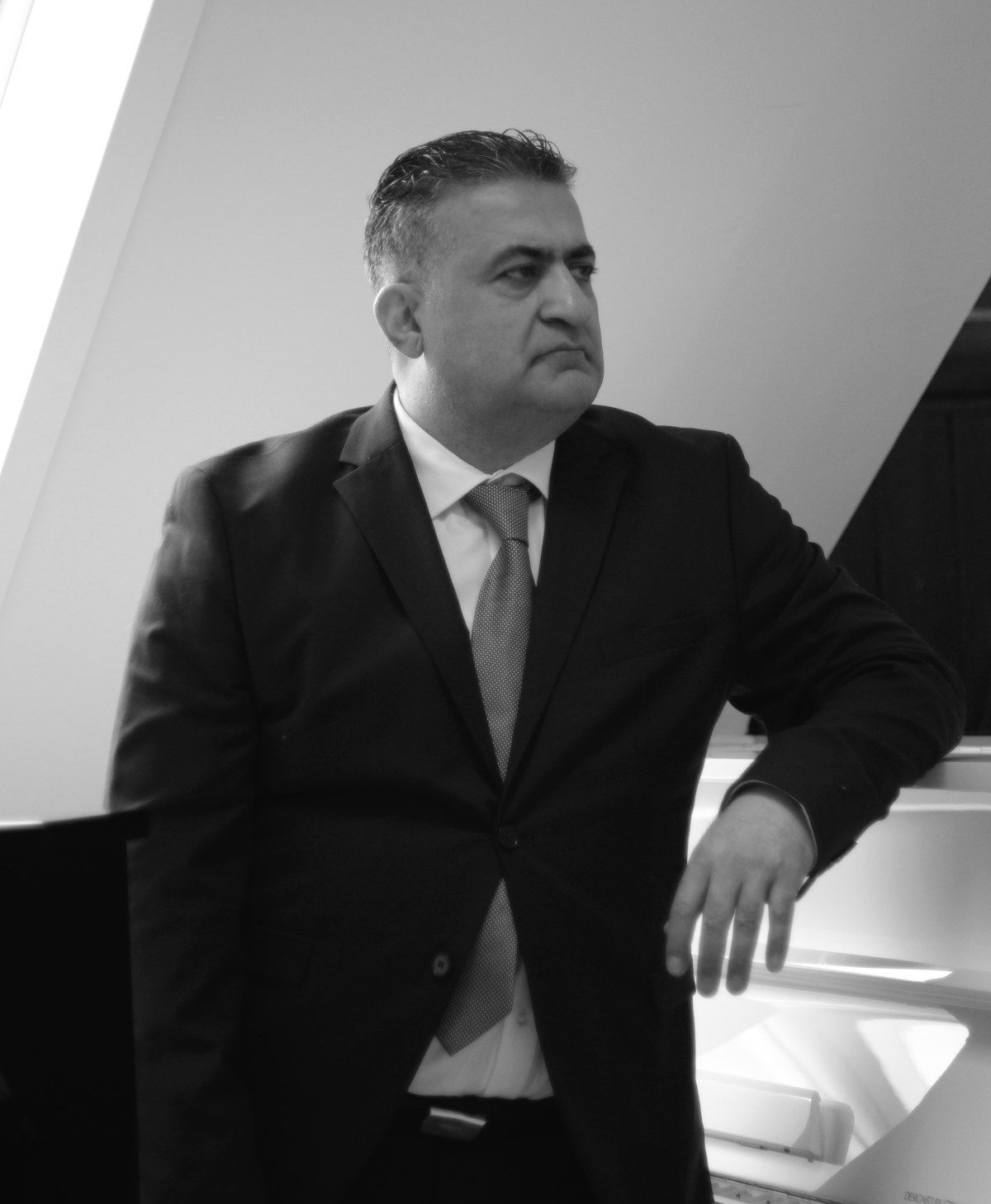
As a passionate pianist, actor and expert in classical music, Aria Farjadi has always loved sharing his knowledge and experience with others. Farjadi Piano School offers piano tuition and performance coaching for everyone who wants to master this beautiful instrument.

Using metaphors, anecdotes and video material, musical concepts and artistic intentions are made clear and vivid for every student. Aria creates a comfortable and engaging atmosphere whether you are a complete beginner or an advanced player.

Lessons are tailored to you — whether you dream of playing at home as a hobby, or you have ambitions for a professional career in music.

Aria Farjadi
Pianist & Founder, Farjadi Piano School

Member of

EPTA · European Piano Teachers Association
FAQ

Frequently asked questions

How much do piano lessons cost?

Prices start from 1,850 DKK for 4 lessons of 30 minutes (Mini package). Our most popular Economy package is 2,450 DKK for 4 lessons of 45 minutes. A trial lesson costs 350 DKK.

Do you teach children?

Yes, we offer individual piano lessons for children from age 5. Lessons are adapted to the child's level, pace and musical interests using engaging material and methods.

Can you prepare me for ABRSM or Trinity grade exams?

Yes, we have extensive experience preparing students for ABRSM and Trinity grade exams from Grade 1 to Grade 8 and diploma level. Our students have passed with top marks.

Do I need to own a piano at home?

We recommend access to a piano or keyboard at home for practice between lessons. A digital piano with weighted keys is sufficient for beginners. We can advise on purchasing an instrument.

Where do lessons take place?

Lessons take place in our professionally equipped studio at Brofogedvej 10, 2400 Copenhagen NV, with a Yamaha piano. The studio is close to Nørrebro Station.

Can you prepare me for music conservatory?

Yes, we offer targeted preparation for entrance exams to music high school (MGK), conservatory and music programmes. We run mock exams with feedback based on real criteria.

Take the first step

Book a trial lesson — 350 DKK

+45 22 26 68 43
Send a message →